





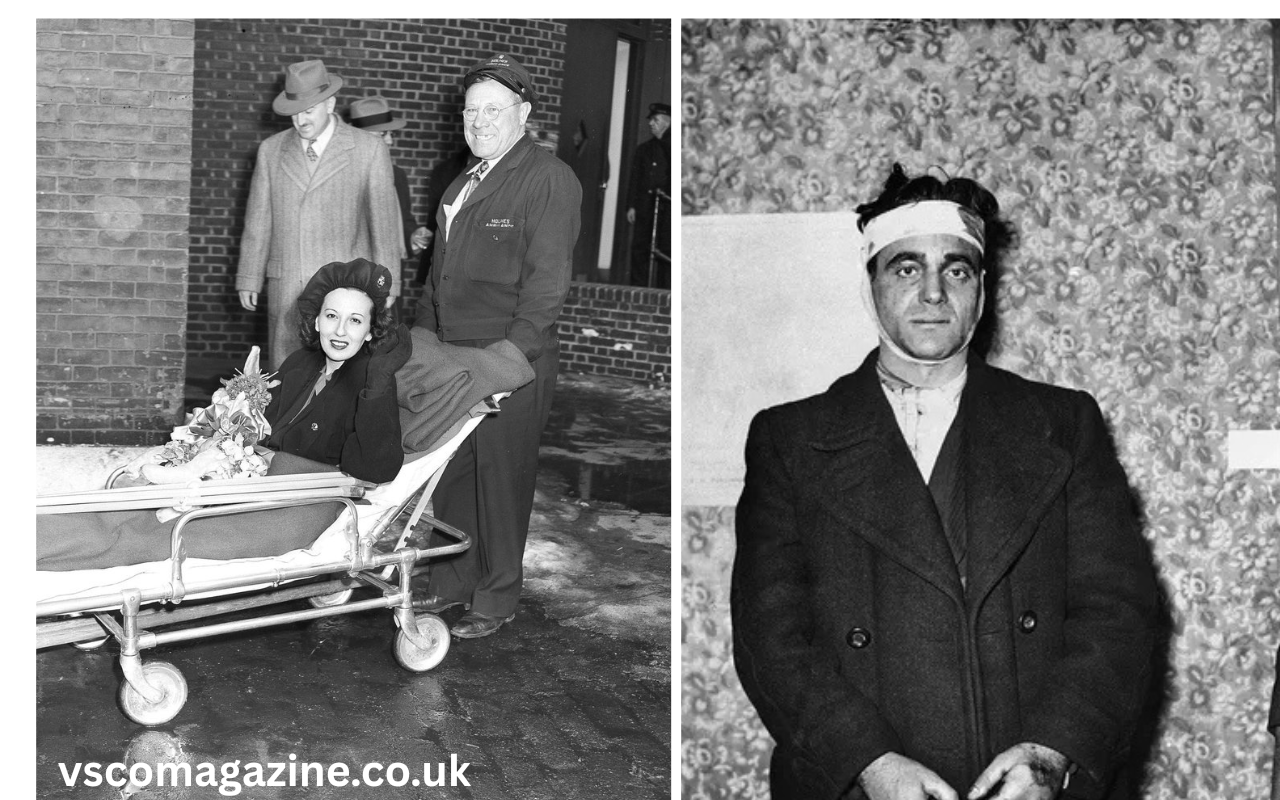
Pearl Lusk The Untold Story Behind the 1946 “Camera Gun” Case
Introduction to Pearl Lusk
Pearl Lusk is remembered as one of the most unusual figures in American true crime history, not because she planned a crime, but because she became unknowingly involved in one. Her name is often connected to the strange and disturbing “camera gun” case of 1946, a story that continues to capture attention decades later. The incident remains a powerful example of how manipulation and trust can lead to unexpected consequences.
Unlike typical crime stories, Pearl Lusk’s case does not follow a simple narrative of guilt or innocence. Instead, it sits in a gray area where a young woman’s belief in a fabricated story led her into a situation she could not fully understand. This complexity is one reason why searches for “Pearl Lusk true story” and “camera gun case explained” continue to rise among readers interested in real-life mysteries.
The story is not only about a shocking event but also about human vulnerability. It shows how circumstances, emotions, and influence can combine to create outcomes that seem almost unbelievable. To truly understand Pearl Lusk, it is necessary to explore both her life and the strange chain of events that changed it forever.
Early Life and Background
Pearl Lusk was a young woman who moved to New York City in the mid-1940s, hoping to build a better future. Like many people during that time, she was drawn to the opportunities offered by a large and fast-moving city. She worked as a salesgirl in a department store, living a modest but independent life.
Her daily routine reflected the experience of many young women of her era. She balanced work responsibilities with social activities and friendships, enjoying the energy of city life. There was nothing unusual about her circumstances, and she was seen as an ordinary individual trying to make her way in the world.
However, her situation became more difficult when she lost her job after the busy holiday season. This sudden change left her in a vulnerable position, both financially and emotionally. It was during this period of uncertainty that she encountered the person who would alter the course of her life.
A Chance Encounter That Changed Everything
Pearl Lusk’s life took a dramatic turn when she met a man who introduced himself as Allen La Rue. Their meeting happened on a subway, a common place for strangers to cross paths in New York City. At first, Pearl showed hesitation, declining his invitation to spend time together.
A few days later, circumstances brought them together again. This time, Pearl’s situation had changed, and she was more open to conversation. The man presented himself as an insurance investigator working on a case involving stolen jewelry, speaking with confidence and authority.
He gradually gained her trust by sharing details of a supposed investigation. Pearl, who enjoyed detective stories and was intrigued by the idea of helping solve a case, found his story convincing. This encounter marked the beginning of a carefully planned deception that would soon escalate into something far more serious.
The Deceptive Investigation Plan
The man convinced Pearl that she could assist him in tracking down a suspect involved in theft. He explained that her role would be simple, involving observation and the use of a special device. Pearl believed she was being offered a legitimate opportunity, especially at a time when she needed work.
He introduced her to what he described as an “X-ray camera,” a device that could supposedly capture hidden objects. The explanation sounded technical and believable, especially to someone without knowledge of such equipment. Pearl accepted the explanation without suspicion.
Trust played a central role in this situation. The man’s confident demeanor and detailed story made it difficult for Pearl to question his intentions. This level of manipulation shows how easily a person can be drawn into a false narrative when it is presented convincingly.
The 1946 Camera Gun Incident
The events reached their peak on the final day of 1946, when Pearl carried out the task she had been given. She followed a woman onto a subway platform, believing she was observing a suspect. With the “camera” in her possession, she prepared to carry out the instructions she had been given.
When she activated the device, a loud explosion occurred. The object she believed to be a camera was actually a concealed weapon. The woman she had been following was seriously injured, and chaos erupted on the platform. The moment was shocking, not only for the victim but also for Pearl herself.
It was only after the incident that the truth became clear. Pearl realized that she had been deceived and used as part of a violent plan. The realization was devastating, as she had no intention of causing harm and had trusted the man completely.
The Man Behind the Plot
The person who manipulated Pearl was not who he claimed to be. His real identity was Alphonse Rocco, and the woman targeted in the attack was his estranged wife. The plan was driven by personal motives rather than any legitimate investigation.
Rocco’s strategy was calculated and disturbing. By involving Pearl, he created distance between himself and the act, making it appear as though someone else was responsible. This approach demonstrated a deep level of planning and a willingness to exploit an innocent person.
After the incident, Rocco attempted to escape but was eventually confronted by authorities. His actions revealed the full extent of the deception, confirming that Pearl had been an unwilling participant in a personal vendetta.
Legal Outcome and Public Reaction
Following the incident, Pearl Lusk was taken into custody as part of the investigation. However, as details emerged, it became clear that she had been unaware of the true nature of the device she used. Her role was reexamined in light of the evidence.
Authorities determined that she had been manipulated and did not have criminal intent. As a result, she was not treated as a typical offender. This outcome reflected an understanding of the unique circumstances surrounding the case.
Public reaction was divided. Some people expressed sympathy for Pearl, recognizing her as a victim of deception. Others were shocked by the bizarre nature of the crime. The story quickly spread through newspapers, becoming one of the most talked-about incidents of the time.
Media Coverage and Lasting Attention
The Pearl Lusk case received widespread media coverage, capturing the attention of readers across the country. Its unusual details made it stand out among other crime stories, ensuring that it remained a topic of discussion for years.
Writers and journalists explored different aspects of the story, including the psychological elements and the role of manipulation. The case was revisited in magazines and later in true crime discussions, keeping it alive in public memory.
Even today, the story continues to appear in articles, podcasts, and documentaries. Its combination of mystery, deception, and human vulnerability makes it a compelling subject for audiences interested in real-life stories.
Psychological Insights from the Case
pearl luskRead More : Fergus Gambon Biography, Career, Antiques Expertise, and Family Legacy
The Pearl Lusk story provides important insights into human behavior and decision-making. It shows how trust and vulnerability can be exploited, especially when someone is facing uncertainty or hardship. Pearl’s situation made her more open to believing the man’s story.
The case also highlights the power of persuasion. The man’s ability to present a convincing narrative and appear authoritative played a crucial role in gaining Pearl’s trust. This dynamic is often studied in discussions about influence and manipulation.
Understanding these psychological factors helps explain how such an unusual event could occur. It reminds us that even ordinary people can find themselves in extraordinary situations when circumstances align in unexpected ways.
Legacy and Historical Importance
Pearl Lusk’s story remains a significant part of true crime history because of its unique nature. It is not simply a tale of crime but a complex narrative involving deception, trust, and unintended consequences. This complexity ensures that the story continues to be remembered.
The case serves as a cautionary tale about the risks of trusting strangers without verification. It highlights the importance of critical thinking and awareness, especially in unfamiliar situations. These lessons remain relevant even in modern times.
Today, Pearl Lusk is remembered not as a criminal but as a symbol of how easily someone can be drawn into a dangerous situation. Her story continues to resonate with audiences, offering both intrigue and important insights into human behavior.